Why Harassment Is Missed Until It Becomes Gross Misconduct

Most definitions of gross misconduct make it sound very straightforward and clear-cut, giving people the false reassurance that they could spot this kind of behaviours on the spot. Almost as if it read like a checklist.
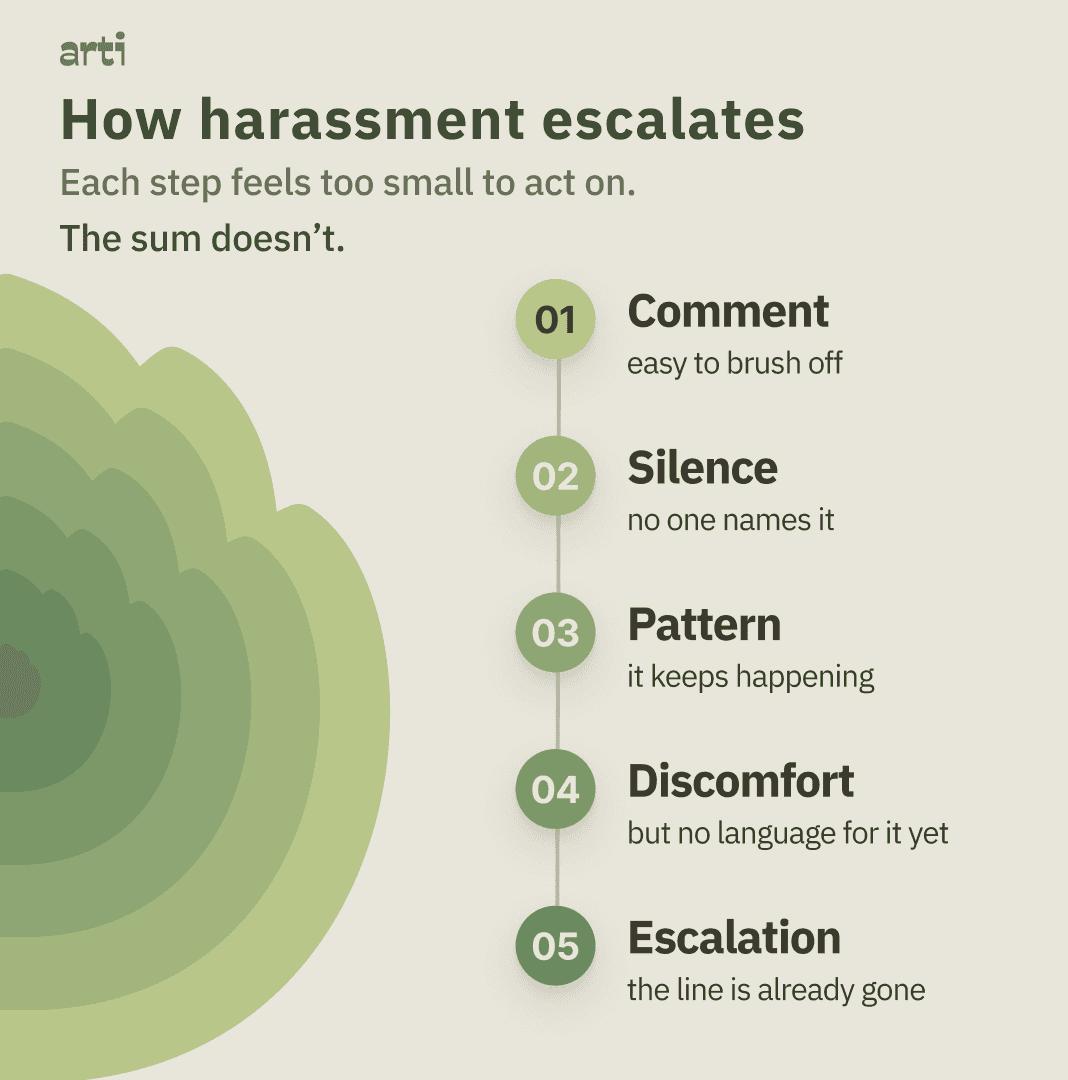
In reality, patterns emerge through subtle sporadic events. Perhaps a comment might feel slightly off which leads to a pattern over weeks and months. The thing is it’s never bad enough to do something about it. Most people hesitate and convince themselves that they are probably overthinking it. They tell themselves that maybe next time, if it happens again then they’ll do something about it. But it happens again and they stay silent. And by the time it’s clearly serious, it has already escalated. That’s when the infamous “Why didn’t you say it before?”
Before we get into any of that, what does gross misconduct mean?
What constitutes gross misconduct at work
Gross misconduct is defined as “a serious act of misconduct by the employee which is so bad that the employer cannot be expected to employ him any longer”, covering harassment, discrimination, threats, theft or serious breaches of trust to name a few.
In a disciplinary context, gross misconduct is at the top of the pyramid. It tends to carry much more weight than common employee misconduct. Think unauthorised absence from work, or arriving late, for which an employee usually gets a warning from the employer. In the case of gross misconduct, they usually lead to termination.
While most workplaces treat sexual harassment as gross misconduct, they often stem from individual incidents that look minor in isolation. The CIPD defines harassment as “unwanted conduct that violates someone’s dignity or creates an intimidating, hostile, degrading, humiliating, or offensive environment”. While that sounds straightforward in theory, recognising these situations in practice is often far more difficult. Much like a game of spot the difference, the signs can be subtle and easy to miss. Identifying them early requires awareness, attentiveness, and a willingness to stay open to what may be happening around you.
Workplace examples of harassment that don’t feel obvious at first
1. Repeated comments that get brushed off
A colleague keeps making remarks about how someone looks. But it’s just a compliment, or maybe it’s kind of funny. Very easy to dismiss it.
And each of these single moments feels so minor until they are not, and they start forming a pattern that are only recognised in hindsight
2. "Jokes" that drift across a line
There’s the team where certain jokes are just part of the fun banter of the team. They’re obviously never aimed at one person. Impressively easy for it to be just background noise.
But they shift and get more targeted, to the point that they do become personal. But because no one has said anything before, challenging them now makes no sense and would mean questioning something that the team has already accepted as normal.
3. A slowly increasingly blurry line between work and personal boundaries
A manager starts messaging outside of work hours, or reaching out to your personal phone because it’s just easier, and anyways its just for work. They suggest catching up one-on-one. They make comments that feel slightly more personal than professional.
Each step on it’s own is small enough to rationalise. But the power imbalance changes how those steps land. The Equality and Human Rights Commission notes that harassment is more likely in exactly these situations where there’s a clear difference in authority because people on the receiving end have less freedom to push back.
4. Customer or client behaviour that gets tolerated
Workplace conflict doesn't only come from inside the team. A regular makes a staff member uncomfortable. But they're known. They come in often. They spend money. Customer is king so they say. Therefore nothing is said.
ACAS research consistently includes clients and customers as a source — and when the business has a commercial reason to keep someone happy, that source often goes unaddressed.
Why harassment gets missed until it escalates
The problem isn't that people don't know what gross misconduct is. It's that real situations don't look like the black and white examples in the compliance video. A few things tend to be at play.
1. Ambiguity
Most of the situations in the examples aren’t clear cut. They’re just enough to make someone pause, and that pause is usually where inaction sets in.
2. Social pressure
Naming something changes the room. For a lot of people, staying quiet feels safer by fear of being told they're overreacting.
3. Threshold confusion
Is this serious enough? Do I have enough to go on? What if I'm wrong? Those questions are almost universal, and they're slow to resolve in real time.
4. Slow build-up
Harassment usually isn’t one moment. It rather develops overtime. What seemed minor in March sometimes only becomes a clear issue by September, and then it becomes hard to point the exact moment where the line was actually crossed.
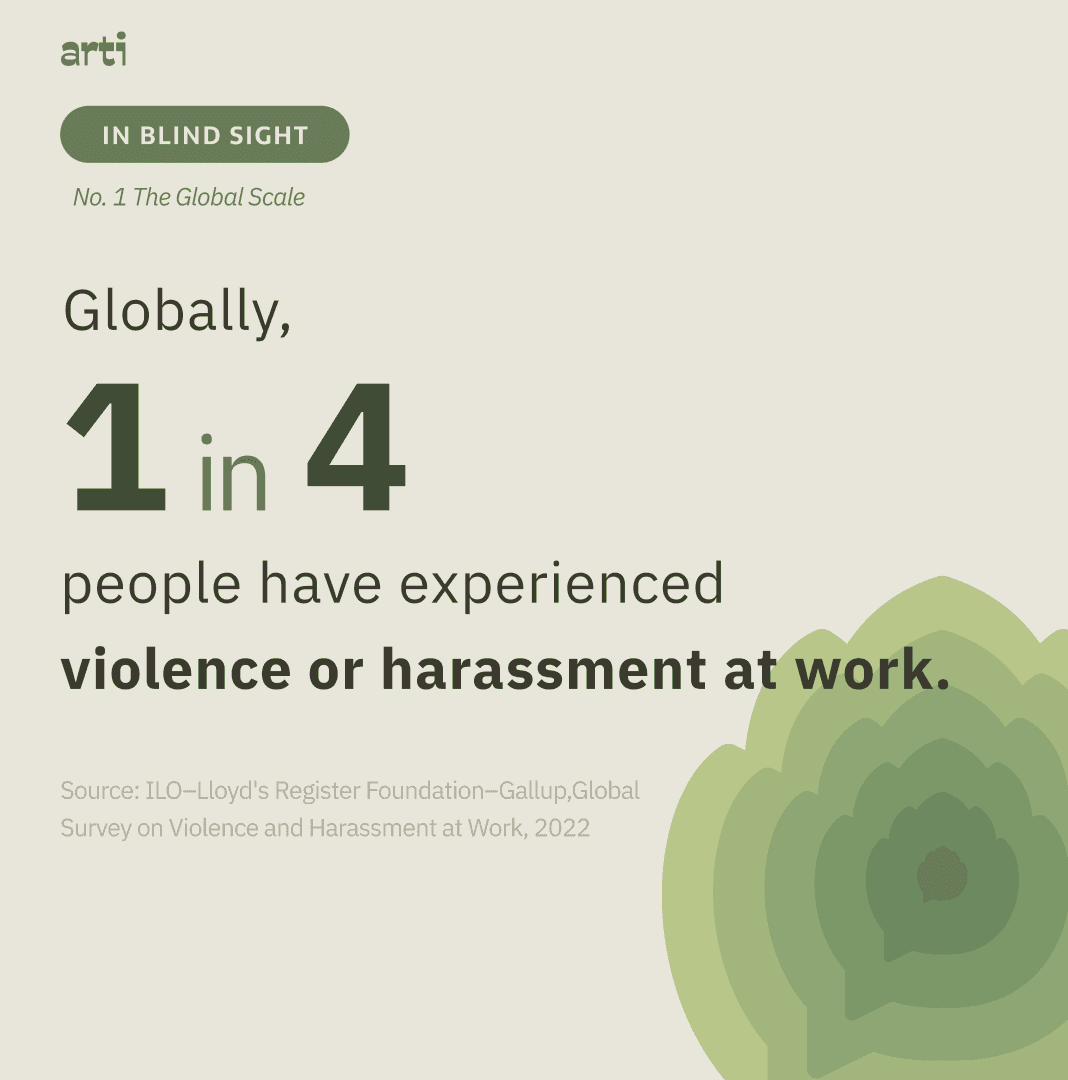
The scale of all this is worth sitting with. Globally, an ILO–Gallup survey across 121 countries found that around 23% have experienced violence or harassment at work during their working lives. That’s almost 1 in 4 people, worldwide.
In the UK, a Parliament inquiry found that 40% of women and 18% of men have been on the receiving end of unwanted sexual behaviour at work. And in the US, the EEOC estimates that around 90% of people who experience workplace harassment never take any formal action. These aren't edge cases. We spend 90,000 hours at work in our lifetime, and for a significant chunk of the global workforce — it’s an unsafe space.
Where standard compliance training falls short
Most compliance trainings, and particularly harassment trainings, rely on obvious examples to make a point.
The issue is, obvious cases aren’t the ones people struggle with or the ones that are complicated in court. The harassment at work examples end up looking very very distinctly from the moments people actually have to interpret. Our current trainings are failing, badly. What can we do about it?
What would actually help people catch it earlier
Recognition doesn't come from memorising policy wording. It comes from exposure to situations that feel realistic. That is seeing how behaviour escalates, learning to spot patterns rather than isolated incidents, and being given space to think through ambiguity before being thrown into the middle of it.
When people have already worked through scenarios that resemble what they encounter at work, the hesitation gets shorter meaning they act earlier. The patters that emerge end up getting stopped in their tracks before they need to get to the gross misconduct threshold.
Where Arti comes in
Arti specialises in the grey areas that your people are more likely to encounter. To avoid only relying on the framing of gross misconduct, Arti adapts to the learner’s knowledge, role and environment through conversational AI. A manager and an intern should’t receive the copy pasted training, because the grey areas they will encounter and must learn to identify encounter are vastly different.